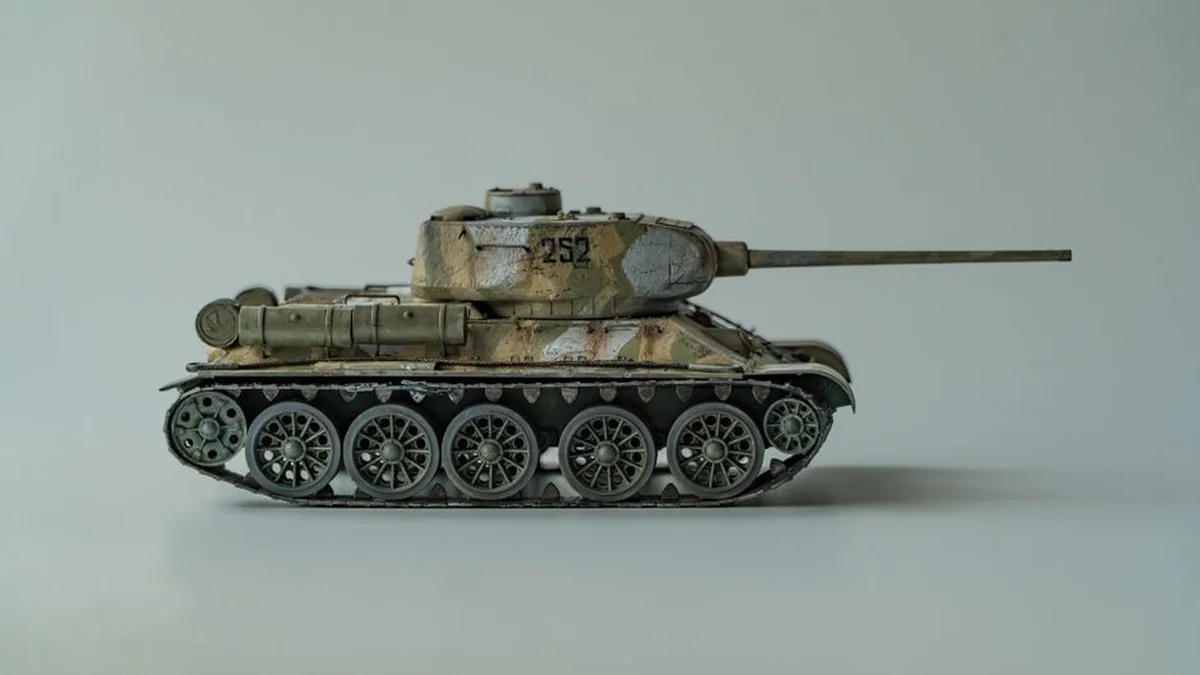
Russian military forces are reportedly implementing historical defensive measures, specifically utilizing “Dazzle” camouflage patterns, to shield their vehicles from modern, AI-guided attack drones. This tactic involves painting military trucks, such as Kamaz and Ural models, with irregular, high-contrast black and white markings, drawing parallels to camouflage techniques first developed during World War I. The objective of this application is not to render the vehicles invisible to the human eye, but rather to confuse automated targeting systems employed by advanced drones.
Military analysts note that the intricate, disruptive patterning is intended to degrade the accuracy of automated sensors, making it more difficult for AI algorithms to lock onto precise coordinates. The practice revives a historical concept of visual deception. The original “Dazzle” camouflage was conceived during the early 20th century, originally developed in 1917, and gained notoriety across various conflicts throughout the world.
While the technology used by modern adversaries has advanced significantly since the Great War, the underlying principle of confusing optical recognition remains a point of focus for both defense and offense. Experts suggest that while the camouflage may appear archaic, its deployment signals an attempt to counter sophisticated electronic warfare by reverting to visual disorientation tactics. The ongoing use of this specific camouflage technique underscores the evolving nature of modern warfare, where even historical methods are being adapted to address contemporary threats posed by autonomous weaponry.
Topics: #world #war #camouflage



The adoption of World War I camouflage techniques against contemporary drone threats presents a notable divergence between historical doctrine and modern warfare technology.