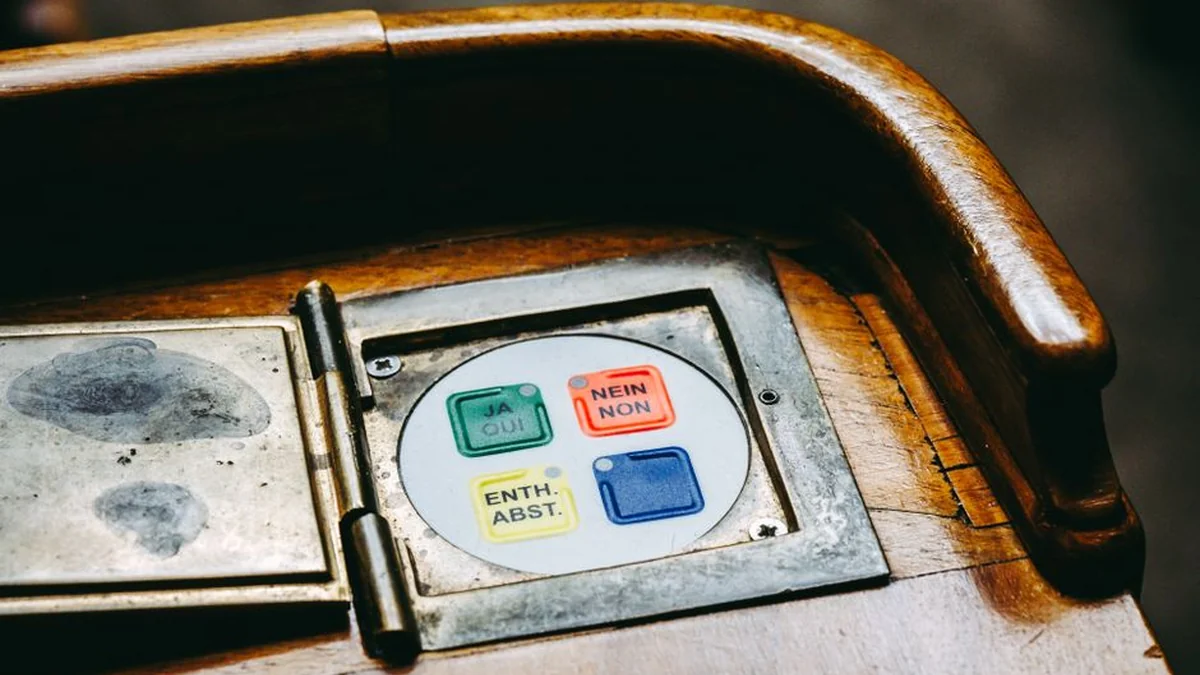
Iceland will not reopen negotiations for membership in the European Union. In a referendum held on Saturday, 52.8 percent of voters voted against resuming talks, while 47.2 percent voted in favor. The narrow result strips the government of the mandate to return to the negotiating table with Brussels.
But the Icelanders’ vote raises a broader question for the European Union: Is the EU losing its ability to attract even stable, wealthy, and economically developed democracies, beyond arguments related to financial benefits? On Saturday, Icelanders went to the polls to decide whether the country should reopen EU membership negotiations. The referendum did not directly decide on Iceland’s membership, but on reopening negotiations, which would then have to lead to an agreement that would require another decision.
Unlike other candidate countries, where membership depends on deep institutional reforms, Iceland’s case is different. It is a wealthy and stable country, closely aligned with the EU’s democratic values and principles. “In the previous accession process, 27 out of 35 negotiation chapters were opened and 11 of them were provisionally closed.
Furthermore, through the European Economic Area (EEA) and Schengen, Iceland already implements a significant part of the EU legislation and is deeply integrated into the Common Market,” said Christine Leuchtenmüller, Head of the Nordic Regional Programme at the Konrad-Adenauer-Stiftung. However, according to Leuchtenmüller, Saturday’s result “mainly reflects Iceland’s particular political and economic circumstances” and should not “serve as a basis for drawing broader conclusions about EU enlargement,” euronews writes. The vote in Iceland also calls into question the EU’s broader approach to security, particularly at a time when the bloc is increasingly relying on enlargement to boost its global influence and security.
This approach has become even more important following Russia’s war in Ukraine, the deterioration of relations with Washington, and conflicts in the Middle East. Reasons for membership The accession negotiations with Iceland would have progressed quickly, as the country already implements a large part of the EU legislation. “In the previous accession process, 27 out of 35 negotiation chapters were opened and 11 of them were provisionally closed.
Through the European Economic Area and Schengen, Iceland already implements a significant part of the EU legislation and is deeply integrated into the Common Market,” said Leuchtenmüller. For Prime Minister Kristrún Frostadóttir’s government, reopening accession negotiations was a key initiative. The aim was to create a stronger security shield and a more stable economic base for Iceland.
Among the reasons were economic pressures, including peak inflation at 10.2 percent and interest rates at 9.25 percent, as well as urgent security threats related to instability in the Arctic and diplomatic tensions over Greenland. Adoption of the euro and membership in the EU Customs Union would have reduced living costs and helped its defense and sovereignty interests. “Icelanders did not vote against Europe; they voted against an unnecessary membership.
When a country already has the common market, Schengen and open borders, the added value of a seat at the table must be greater than the cost of sharing control over its main resource,” said Mika Aaltola MEP from the European People’s Party (EPP), shadow rapporteur in the European Parliament for the report on the EU’s diplomatic strategy and geopolitical cooperation in the Arctic. Islanda i thotë “Jo” rikthimit të negociatave për anëtarësim në BE Both Ukraine and Moldova see EU membership primarily as a security option. The Russian invasion made EU membership a key issue for Ukraine’s future, while Moldova faces interference and pressure from Russia.
Both countries received official candidate status in 2022, officially opened accession negotiations in 2024, and have been progressing in parallel since then. Membership would allow both countries full access to the EU’s single market and potentially billions of euros in European funds for modernization, infrastructure and, especially for Ukraine, reconstruction. Meanwhile, Montenegro and Albania are currently leading the accession process.
Montenegro has been negotiating since 2012 and has already opened all 33 policy areas, while Albania, a candidate since 2014, has accelerated negotiations in recent years. For both countries, membership promises more investment and access to EU funds and markets. The accession process also aims to boost domestic reforms, particularly in the fight against corruption, the independence of the judiciary and the rule of law.
Candidate countries Serbia, North Macedonia and Bosnia and Herzegovina also see membership as a path to greater economic development and political stability, but their journey has been slower. Serbia has been negotiating with Brussels for more than a decade, but its relations with Kosovo, concerns about democratic standards and continued ties with Russia have hampered progress. North Macedonia faces obstacles, including disputes with neighboring EU member states, while Bosnia and Herzegovina still needs significant institutional and rule of law reforms.
For all three countries, membership would mean access to a market of around 450 million people, more investment and a stronger political position within Europe. The most complicated cases are Georgia and Turkey. Georgia received official candidate status in 2023, but the accession process has stalled due to EU concerns about democratic regression and the government’s political direction, despite historically strong public support for European integration.
Turkey has been a candidate since 1999 and began negotiations in 2005, making it the candidate country with the longest accession process. However, negotiations have been frozen for years due to concerns about democracy, fundamental rights and the rule of la
Topics: #iceland #vote #european