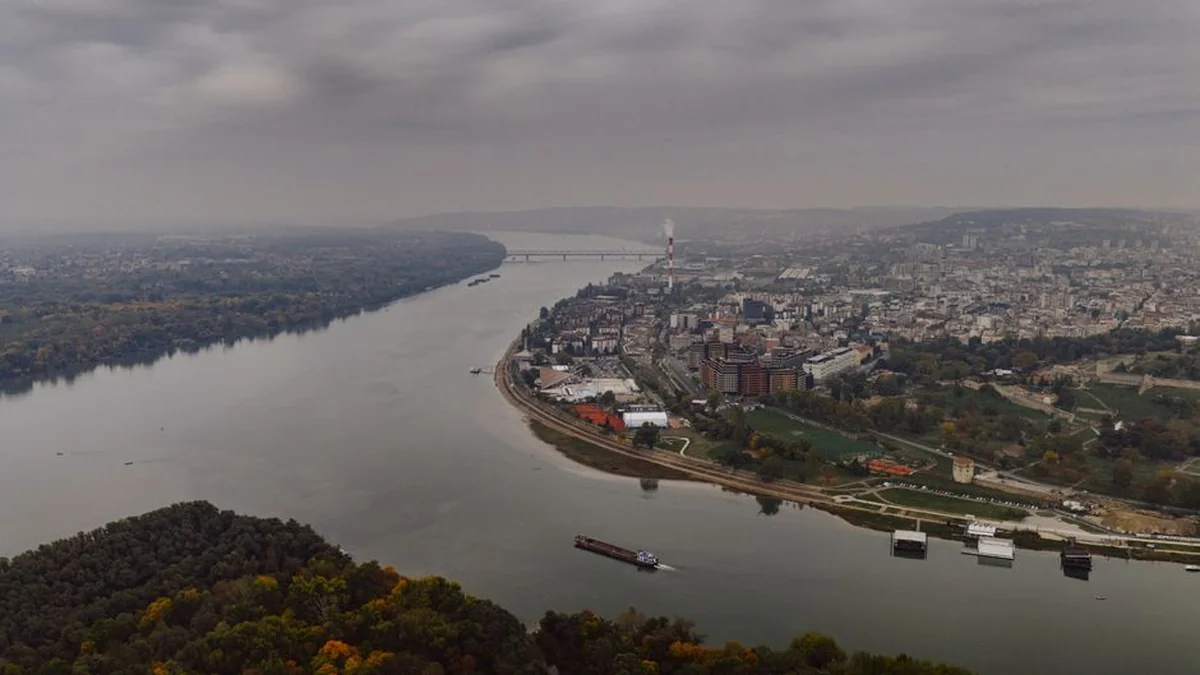
Falling water levels in the Danube River are prompting concerns about potential energy shortages across parts of Central and Eastern Europe. The significant reduction in the water volume of the Danube has placed several thermal power plants near operational limits, prompting various governments in the region to implement measures aimed at preventing an energy crisis. The continuous drought conditions, coupled with successive waves of extreme heat, have severely diminished the flow of this major European waterway.
As of Monday, the water level in the Danube in Budapest, the capital of Hungary, experienced another drop of 10 centimeters. Forecasters do not anticipate a rise in the Danube’s water levels in the immediate future, given the lack of significant rainfall predicted. Furthermore, the region is bracing for another period of intense heat, with temperatures projected to surpass 38 degrees Celsius.
These declining water levels directly impact the ability of cooling-dependent power generation facilities to operate efficiently. Consequently, managing the remaining water resources in the Danube becomes a critical issue for regional energy stability. Authorities are closely monitoring the situation to mitigate potential disruptions to the energy supply chain resulting from the low water availability.
Topics: #danube #water #energy